Shola Jawid English Section
Taliban and Pakistan After 2021: From Strategic Depth to Security Nightmare
Introduction
The recent escalation of armed conflict between the Taliban and the Pakistani military marks a turning point in the political and security landscape of the region. What once served as Pakistan’s most effective tool of influence in Afghanistan has now become its principal source of instability. For nearly three decades, Pakistan’s military and intelligence establishment viewed the Taliban as a strategic asset—an ideological and geopolitical instrument to secure “strategic depth” against India and maintain dominance over Afghan affairs.
********************
The International Committee to Support the People's War in India (ICSPWI) salute Comrade Keshava Rao, Basavraj, General Secretary of the CPI (Maoist), murdered by the repressive forces of the fascist Modi’s regime, lackey to imperialism, along with 26 other Maoist cadres in the Abuijhmad forest, Narayanpur district, Chhattisgarh on May 21.
This is a huge loss for the Party, the People's Liberation Guerrilla Army, the proletariat and masses of India engaged in the people's war, for the International Communist Movement, for the proletarians, the exploited and the oppressed peoples in the world.
Comrade Basavraj was the founder of the People's Guerrilla Army in 2000 and has led as Commander the most important actions of the people's war in recent years, dealing bold blows to the reactionary Indian regime and imperialism. His role in the formation of the Guerrilla Bases and the birth of the People's Power Organizations was crucial.
Basavraj became the Party's general secretary in 2018. He was trained by the Party and the masses, always giving an extraordinary example of bravery, wisdom and determination. He was a master of the people's war and has given his life for the revolution.
He will never be forgotten!
The Indian Modi’s regime has murdered the comrades as part of the 'Operation Kagaar', a genocidal campaign of repression, massacres, arrests, bombings and devastation on the people, particularly
the most oppressed and exploited masses, the Adivasis, etc., within a plan that aims to wipe out the people's war and the Party leading that by March 2026.
Now they cry victory, but the Indian masses and the Party know how to respond to this attack with adequate strategy and tactics, strengthening and extending the resistance and mobilization of the masses.
The Committee had already launched a one-year-long campaign of internationalist solidarity and support, holding a first successful week of action on April 7-12.
The death of comrade Basavraj calls us, also in his honor and name, to multiply our efforts so that this campaign is even stronger and wider and contributes to deal hard blows on the Indian regime and imperialism; all the more so because it is inextricably linked to international solidarity with the Palestinian people, who heroically face the genocidal plan of Israel and imperialism -Netanyahu is supported in all forms by the reactionary Modi’s regime- and is part of the struggle of the proletariat and peoples against the imperialist war.
Honour in all forms comrade Basavraj!
Intensify mobilization and actions against the Operation Kagaar, for the release of political prisoners in India
Extend the support to the People's War in India and to the Communist Party of India (Maoist), as important international reference point for the liberation struggle of the people oppressed by imperialism, for the world proletarian revolution, socialism and communism
ICSPWI
25 May 2025
csgpindia@gmail.com
********************
March 8, International Women's Day, is an opportunity to celebrate the just struggles of women worldwide and renew the commitment to the complete liberation of women from the domination of the inhumane class system. We honor this day and pay tribute to all women, especially the brave and hardworking women of Afghanistan who have stood against the dark oppression of the Taliban. March 8 not only reminds us of the relentless efforts of women to achieve their human rights but also serves as an opportunity to raise awareness and mobilize millions of women oppressed by the class system in the fight for a world free of exploitation and oppression.
********************
Internal Conflicts and External Pressures: The Taliban on the Brink of Collapse
The Taliban’s oppressive and fragile apparatus has never been more fragmented and embroiled in a multifaceted crisis. Their consistent denial of internal divisions is no longer concealable. The escape of Abbas Stanikzai, supported by the Ministers of Interior and Defense, along with the departure of other Taliban leaders to Arab countries, internal conflicts, purges, and the dissatisfaction of local commanders all reflect the intensifying internal contradictions within the group.
********************
Bashar al-Assad’s regime has collapsed, and “Hay'at Tahrir al-Sham” (HTS), along with its allied Islamist groups, has taken control of large parts of Syria. The rapid disintegration of Assad's regime is reminiscent of the fall of Ashraf Ghani's puppet government in Afghanistan three years ago. Although Islamists have been significant players in the political arena and reactionary wars in the Middle East over the past three to four decades, HTS's rise in Syria marks the pinnacle of this trend. Syria remains a highly ambiguous and complex situation, becoming a hotspot of contradictions and a battleground for competition among imperialist powers and reactionary regional actors. Parts of the country are under the occupation of imperialist and reactionary forces, with chaos and a political vacuum being its prominent features.
********************
Proletarians and oppressed peoples of the whole world, unite!
May 1st against imperialism, reaction, misery and war for proletarian and socialist revolution all over the world!
The May 1st is the day in which the working class and the exploited masses of the world aspire to fill the squares and streets in all countries as a single international class, mobilized against capitalist world exploitation.
********************
A great Marxist-Leninist-Maoist, proletarian internationalist,and revolutionary communist of our time have died. On December 17, 2022, the Communist Party of the Philippines announced the death of its founding chairman, Jose Ma. Sison states, “The greatest Filipino of the past century bereaved us peacefully last night.”
CONTINUE
********************
The memory of comrade Salim will always remain in our hearts!
A great sorrow, comrade Salim, a former member of the Central Committee of the Communist (Maoist) Party of Afghanistan, passed away. Comrade Salim was one of the leaders and founders of the Organization for the Salvation of Afghanistan (1979) and the Communist (Maoist) Party of Afghanistan (2004). In the last years of his life, Comrade Salim suffered from chronic illnesses due to his old age and the hardships of a professional revolutionary's life and torture in the prison chambers of the PDPA regime.
CONTINUE
********************
If we don't want our children to be slaughtered, we must consciously and unitedly fight for the new world!
In the early morning hours of Friday, August 30, a suicide attack on a private education center in western Kabul killed nearly 70 students and injured about 100. Most of these victims were girls. According to eyewitnesses, the suicide bomber blew himself up in a classroom packed with 500 students. The shocking death toll and the violent and inhuman behavior of the Taliban toward the families of the victims created a sad and tragic scene of a humanitarian disaster in western Kabul.
********************
Sholajawid # 27, round 4, May 2022
Our urgent task: Rectify the Party's style of work--combat subjectivism and sectarianism
To rectify our Party's style of work is pivotal in the struggle for the consolidation and expansion of the Party. Through its success, we can effectively organize class struggle and implement the Party's political program. Therefore, all party members and supporters should participate in the rectification campaign and actively identify, discuss, and rectify our Party's ideological-political and organizational shortcomings and errors. Only then can we go beyond the movement's and party's period of "infancy" and "amateurishness" and fulfill the role of the vanguard of the proletarian revolution as a detachment of the international proletariat. We must learn from past mistakes to advance on building a solid party based on Marxism-Leninism-Maoism (MLM), capable of leading people's war and leading the country's new democratic and socialist revolution.
********************
Statement of the Communist (Maoist) Party of Afghanistan on Taliban's forced hijab policy:
Organize, Resist, and Fightback against the Taliban's war on Women
The Taliban has stepped up its efforts to establish a gender apartheid regime, re-enacting the unnerving misogynist policies that earned them infamy in the 1990s. The vile Taliban Ministry of Vice and Virtue, which is callously yet meaningfully and deliberately housed in the compound of the now-defunct Ministry of Women's Affairs, has ordered all women in the country to hide their faces in public and even avoid going out of their houses altogether, as "the best option to observe sharia hijab."
CONTINUE
********************
May Day Joint Declaration
Long Live Red May Day!
The immediate task of the World Proletariat and Marxist-Leninist-Maoist forces is to utilize the developing revolutionary condition at the international plane, destroy the destructive Imperialism and establish Socialism where there is no way for wars!
CONTINUE
********************
On the fiftieth anniversary of the founding of the TKP-ML
To the Communist Party of Turkey-Marxist-Leninist (TKP-ML)!
Dear comrades!
We salute and congratulate you, the entire communist (Marxist-Leninist-Maoist) movement, and the revolutionary and toiling masses in your country on the glorious occasion of the fiftieth anniversary of the founding of your Party. Your Party's five decades of courageous struggle have been a source of inspiration and courage for revolutionary communists worldwide. Your Party has paid enormous sacrifices in the trenches of revolutionary struggle and has courageously hoisted the banner of MLM during a period of the ebb of the revolutionary communist struggle internationally. We should celebrate this experience to reaffirm our commitment to continue and re-energize our struggle until final victory. We are confident your fifty-year struggle has enriched the arsenal of people's struggle against the Turkish fascist state; we are sure this will eventually succeed in the new democratic and socialist revolution in Turkey-North Kurdistan.
CONTINUE
********************
Down with imperialist and reactionary wars!
Long live proletarian internationalism!
Russia’s imperialist, reactionary and criminal invasion of Ukraine and the ensuing global crisis has once again highlighted the fundamental incompatibility of the capitalist-imperialist world-system with the general interests of humanity. This reactionary war of invasion has already caused enormous human suffering and destruction. Seizing on this, the imperialist governments, the media, and their intellectual mouthpieces are constantly and irresponsibly blaring war hysteria and preparing to escalate the military conflict with Russia that could potentially spiral into a nuclear holocaust, and thus the end of life on earth.
CONTINUE
********************
Women's Struggle is the Frontline of Struggle for New Democratic Revolution in Afghanistan
This year we are celebrating 8 March, international women's day, at a time when women are suffering under the yoke of a misogynist gender apartheid regime, which is systematically depriving women of their fundamental human rights.
********************
Long Live the People's War in India!
Down with genocidal Hindutva Fascism!
The People's War in India led by the Communist Party of India (Maoist) is the advanced edge of the international struggle against the rotten capitalist-imperialist system.
*********************
Honor the Martyrs Day of Afghanistan’s Maoist Movement
The Martyrs Day of the Communist (Marxist-Leninist-Maoist) and the New Democratic movement of Afghanistan is coming at a time when the oppressed people of the country are destitute and suffocating under the yoke of the Taliban regime. The economic crisis and the collapse of the banking system are further pauperizing the masses.
CONTINUE
*********************
Statement of the Communist (Maoist) Party of Afghanistan on the Taliban cabinet:
Down with the Islamic Emirate of the Taliban
The Taliban has announced a purely clerical and male-only cabinet, consisting of the old and new leaders and commanders of the group. The Taliban had initially promised to form an “inclusive government.” Therefore, many remnants of the former puppet regime and the imperialist and reactionary powers, who had believed the Taliban, are disappointedCONTINUE
*********************
The Taliban instrumentalizing women to promote their reactionary ideology
Hawa
Afghan women under the Islamic Emirate of the Taliban have lost all their human rights just because they are women. After women bravely stood up against the reactionary and barbaric Taliban rule, the Taliban resorted to
CONTINUE
*********************
Muere el presidente Gonzalo tras tres décadas en prisión.
Spanish
*********************
President Gonzalo dies after three decades in prison
Abimail Guzman (Gonzalo) died at the age of 86 after spending almost three decades in prison. He led the Communist Party of Peru for more than three decades and 10 years led the People's War in Peru before being arrested in 1992. However, the People's War in Peru was defeated because of the emergence of the right opportunist line.
*********************
Women of Afghanistan are at the forefront of the struggle against the Taliban
Khurshid Atlas
Women are at the forefront of the struggle against the Taliban since Thursday, 2 September. Rebellious women have staged several protests in Herat, Kabul, Balkh, Nimroz, and Ghor provinces confronting the Taliban.
*********************
Quiénes son los talibanes?
[El siguiente texto es una traducción de un extracto del folleto Historical Background of Afghanistan que apareció como apéndice en el programa C(M)PA publicado en 2004. El título anterior [¿Quiénes son los talibanes?] es el elegido para la presente traducción. En él se da cuenta de la aparición de los talibanes en 1994 hasta la caída de su régimen en 2001].
*********************
El regreso de los talibanes y sus consecuencias para Afganistán
La caída de Kabul en manos de los talibanes marca el final de una tragedia y el comienzo de otra para los pueblos de Afganistán,*********************
The return of the Taliban and its consequences for Afghanistan
The fall of Kabul to the Taliban marks the end of one tragedy and the beginning of another for the peoples of Afghanistan as if Afghanistan is a land of recurring catastrophes and its people are doomed to endless suffering. Fear, uncertainty, and confusion permeate society. Concerns about the gloomy future have taken away all hope and enthusiasm from the people. Most of the people suffer from extreme poverty, and though the people displaced by war are starving. Many young people have left their schools, colleges, and universities and headed to Iran, hoping to reach Europe via Turkey. Many families are stranded on the Pakistan-Afghanistan border, and those who have reached Pakistani cities are camping in mosques, wedding halls, hotels, and outdoors.
CONTINUE
*********************
*********************
Los yankees se retiran, la guerra civil reaccionaria se intensifica.
*********************
*********************
*********************
The collapse of puppet regime, the disgraceful defeat of the US imperialism and the rise of the Taliban fundamentalism to power
The deadline for the withdrawal of the imperialist occupying troops was set for August 31, but the puppet regime in Kabul collapsed on August 15. Despite the constant utterance by the American officials that the “Saigon moment” would not be repeated, the Kabul moment became worse.
*********************
Who are the Taliban?
[The following text is a translation of an excerpt from a pamphlet Historical Background of Afghanistan that appeared as an appendix in the C(M)PA Program Published in 2004. The above title [Who are the Taliban?] is chosen for the current translation. This gives an account of the Taliban’s emergence in 1994 to the fall of their regime in 2001]
*********************
El camarada Zia y el nuevo movimiento comunista en Afganistán
*********************
Statement of the Communist (Maoist) Party of Afghanistan on the first anniversary of the Death of Comrade Zia:
The memory of Comrade Zia is in our hearts and his example is the torch of our path!
One year has passed since the death of comrade Zia, the founding chairperson of our party. His death was not only painful for his family, members, and supporters of the party, but his empty place is being felt in the communist struggle of the country and the world. He was the objective embodiment and true model of a communist leader and militant, who had achieved revolutionary experience and knowledge in the trenches of national and class struggle. Undoubtedly, his loss will be difficult to recover for our party and the communist movement of the country.
CONTINUE
*********************
Brief Report on the Reconstruction of the Communist (Maoist) Party of Afghanistan One Year After the Death of Comrade Zia
One year has passed since the death of Comrade Zia chairperson of the Communist (Maoist) Party of Afghanistan (C(M)PA). In this one year, the C(M)PA faced many problems that were solved with the courageous initiatives and efforts of the members of the Central Committee and the party units. Dogmatism and sectarianism had put our party unity in serious danger. The most important organizational problem that our party faced after the death of Comrade Zia was the dissolution of the party's Politburo by two members of the Central Committee. In the absence of the party's Politburo, the two mentioned members, under the guise of the International Relations Committee, dismantled the party’s democratic centralism and led the party on the path to dogmatism and sectarianism. The other members of the Central Committee and party units responded by protesting and criticizing the behaviour of these two members. But this dogmato-sectarian circle did not heed these protests and criticisms but turned to vengeful "criticism" to silence the critiques and adamantly defended their unprincipled actions.
CONTINUE
*********************
Note: The following article [Will the Taliban fight; or will they join the process of reconciliation with the occupiers and the puppet regime?] was penned by comrade Zia and published in Sholajawid # 25, round 3, 2011, when the above question was first posed after the US imperialists announced its plan to withdraw by 2014 and the puppet regime increased its efforts to reconcile with the Taliban. Now that the US imperialists are set to complete their withdrawal before 11 September 2021 and have pinned all their hopes on the United Nations-led diplomatic efforts to establish peace between the puppet regime and the Taliban insurgency, this article is useful in understanding the situation as it is explaining the historical context of Taliban’s emergence and the nature of the movement.
WORD ــــــــــــــــــــــــ PDF
*********************
Joint Declaration May Day 2021
Red, Proletarian and Internationalist May Day!
Resist and fight against the capitalist/imperialist system to advance towards a new power in the hands of the proletarians and people’s masses, socialism and communism.
This 1st of May, the proletarians and oppressed peoples of the world are faced with the spread of the pandemic which resulted in over 130 million infected and over 3 million dead because of the capitalist mode of production, imperialism, its states, its governments, its lackeys.
Already in the past the imperialists had produced many viruses as result of natural disasters, social devastation, nuclear and biological weapons tests.
CONTINUE
word
*********************
Statement of the Communist (Maoist) Party of Afghanistan on the announcement of the withdrawal of the American occupying forces from Afghanistan
On April 13 Joe Biden the president of the United States announced that he is “ending the longest war of America’s history” by withdrawing US troops from Afghanistan by September 11 this year.
*********************
Comrade Zia and the new communist movement in Afghanistan
Sholajawid # 26, round 4, February 2021
Comrade Zia has made important theoretical contributions to communist struggle in Afghanistan and internationally. Although he was constantly engaged in practical and organizational matters, he persistently strove to respond to the theoretical necessities of revolutionary communist struggle. One of his most important contributions is his historical analysis and summation of the positive and negative experiences of the communist and the new democratic movement in the country. He also made important contributions in synthesizing the experience of the international communist movement in formulating the program and strategy of the proletarian revolution in Afghanistan.
*********************
To the readers of the Sholajawid website, supporters and members of the Communist (Maoist) Party of Afghanistan!
From November 27, 2020 to January 3, 2021, the website of Sholajawid, the organ of the Central Committee of the Communist (Maoist) Party of Afghanistan, was hacked.
This cyber issue is not entirely clear to us, and we are looking into it in detail. From the content of materials published during this period, it appears that a former member of the central committee of the Communist (Maoist) Party of Afghanistan has been involved. This former member was expelled from the party due to endangering the party interests with sectarianist organizational behavior and irresponsible literary conduct.
Due to this cyber issue, our email address has changed. To contact us, please refer to the email address listed on the website.
Political Bureau, Central Committee of the Communist (Maoist) Party of Afghanistan
3 January 2021
*********************
Comrade Zia’s name as wise and conscious Leader of the working class, will be inscribed in history as one of the pioneers of the class
With great sadness we learned about the death of the chairperson and founder of our party, comrade Zia. The death of comrade Zia is a heavy blow and great loss not only for the members and supporters of our party, but for all the communists, working classes and oppressed masses. The local committee # 1 (unit # 3) of the party pays its condolences to the central committee of the party, members and supporters of the party, the Maoist movement of the country, all members of comrade’s family, working classes and masses of the country and the world.
CONTINUE
*********************
Proletarians of all countries, unite!
June 24, 2020
To the Communist (Maoist) Party of Afghanistan,
Comrades,
The Central Committee of the Communist Party of Brazil (Red Fraction) addresses to the Central Committee of the Communist (Maoist) Party of Afghanistan, to all its leaders, cadres and militants, to the proletariat and oppressed masses that struggle under your leadership, in order to manifest our deep and fraternal condolences for the death of comrade Zia.
CONTINUE
spanish
*********************
رفاقنا في الحزب الشّیوعي الماوي الأفغاني
تحیّة ثوریّة
تلقینا ببالغ الأسى نبأ وفاة الرفیق الأمین العام للحزب الشیوعي الماوي في أفغنستان. ّ نتوجّه لكم و لكافة مناضلي الحزب و للحركة الشیوعیة الماویّة العالمیّة بتعازینا لفقداننا المناضل الفذّ الرفیق ضیاء الذي قاد مسار توحید الماویین في أفغنستان و النّضال الوطني ضد المحتلّین السوفیات و الأمریكان .
المجد للرفیق ضیاء
المجد للشیوعیّة
شیوعیّون ماویّون من تونس
06/29/2020
Aux camarades du parti communiste maoiste Afghan
Nos salutations révolutionnaires
Nous avons reçu la nouvelle du décès du camarade DHIA secrétaire général du PCMA. Nous vous adressons ainsi qu’à tous les membres du parti et au mouvement communiste maoiste international nos profondes condoléances pour la perte du grand militant DHIA qui a lutté pou l’unification des maoistes en Afghanistan et a dirigé la lutte nationale contre les impérialistes Russes et Américains.
Gloire au camarade DHIA
Gloire au communisme
Communistes Maoistes en Tunisie
*********************
The founding chairman and leader of the Communist (Maoist) Party of Afghanistan has passed away at 68 years old, after a heart attack. In a eulogy dated 21st of June, the party declares that “Comrade Zia’s life was truly in the service of revolution and the international proletariat” and that “Comrade Zia will be immortalized in the struggles of the international proletariat!”.
The Communist League of Norway, Serve the People, has declared their grief in a statement to the Communist (Maoist) Party of Afghanistan, dated 30th of June:
Proletarians of all countries, unite!
June 30, 2020
To the Communist (Maoist) Party of Afghanistan.
Dear comrades,
In memory and grief over the death of Comrade Zia, Serve the People – Communist League of Norway greets the Central Committee of the Communist (Maoist) Party of Afghanistan, the leaders, cadres and militants, the proletarians and masses that struggle under its leadership.
Comrade Zia, as founding chairman of your Party, the vanguard of the proletariat of Afghanistan and the heroic popular masses of this country, died from a heart attack at the age of 68. We know his heart was always beating for the revolution and for the proletariat. His heartbeats will forever pulsate in the struggle for the Party and for the World Proletarian Revolution. He gave his life to the revolution, to the party, to the proletarian and popular struggle, for new democracy, socialism and shining communism. His life and work changed the web of matter and relations in this world forever. Comrade Zia is immortal.
The communists and revolutionaries of Norway send our profane greetings to the toiling masses of Afghanistan. The imperialist old state of Norway has for decades participated in the yankee occupation and intervention in Afghanistan. We condemn the imperialists, and we salute the resistance!
In the face of occupation, heroic fighters of the peoples of Afghanistan have risen against imperialism. We know this to be the preludium to the Glorious People’s War in Afghanistan, the war of the masses that will be waged under the direction of the Communist Party, under the banner of Maoism. In this People’s War, we know Comrade Zia will be marching in the eternal columns of the martyrs of the International Communist Movement.
Long live Marxism-Leninism-Maoism, principally Maoism!
Forward on the path of People’s War!
Eternal honour and glory to Comrade Zia!
Comradely,
Serve the People – Communist League of Norway
Central Leadership
*********************
Condolences upon the tragic death of Comrade Zia
To the Communist (Maoist) Party of Afghanistan,
Greetings in internationalist solidarity from Nevada. As a fellow Marxist-Leninist-Maoist, though I am on the other side of the world from you, I must offer my sincerest condolences upon the death of Comrade Zia. For the Communist movement, the loss of any comrade is a great tragedy. This tragedy is doubly terrible when the one lost is a comrade who has done so much for the revolutionary struggle in his country and, by extension, the struggle of the proletariat worldwide. Comrade Zia shall be missed, and his legacy shall be carried forward upon the shoulders of the masses toward the final victory of Marxism-Leninism-Maoism. I bid you the greatest of luck in continuing the struggle in your country.
CJ Hunt
Nevada
American
*********************
Condolence Message on Occasion of Death of Comrade Zia
Chairman of the Communist (Maoist) party of Afghanistan
The Regional Committee No. 2 held its official meeting with a three-minute silence to commemorate the memory of Comrade Zia, chairman of the Communist (Maoist) Party of Afghanistan. Then the eulogy of the Central Committee of the Communist (Maoist) Party of Afghanistan was read out and it was decided that all members and supporters of the party to hold commemoration ceremonies in celebrating memories of the Comrade Zia.
CONTINUE
*********************

Celebrate the Legacy of Comrade Zia
Published on June 28, 2020
The PCR-RCP sends its condolences to the Communist (Maoist) Party of Afghanistan [CmPA] regarding the death of Comrade Zia, one of the principle architects of the Maoist movement in Afghanistan and the international promulgation of Marxism-Leninism-Maoism. His passing is significant for us because of our bilateral relationship with the CmPA and the ways in which our Afghanistan comrades sought to include us in the old RIM and then its reconstruction. When we founded ourselves as a party in the early 2000s the CmPA sent international observers to that Congress and, since then, we have continued to have a fruitful relationship. Zia’s death is similar to losing a party member due to this long relationship.
CONTINUE
*********************
Le camarade Zia, secrétaire général du parti communiste maoiste en Afghanistan, restera un flambeau qui illumine le chemin de la révolution.
Le camarade Zia, secrétaire général du parti communiste afghan, est décédé d'une crise cardiaque à l'âge de 68 ans, c’est ce qu’ a déclaré le parti le 21 juin 2020.
*********************
The Path of Comrade Zia Continues
The Communist (Maoist) Party of Afghanistan has lost one its founding leaders and chairperson; this is a huge loss for the party, the camp of revolution in our country, and the international Maoist movement.
continue
*********************
From: Party Communist Maoist Italy
Comrades,
The Maoist Communist Party - Italy joins the comrades of the Communist (Maoist)Party of Afghanistan in honoring, celebrating and drawing lessons from the life and work of Comrade Zia.
continue
*********************
From :The French Maoist Communist Party
statement: Comrade Zia is immortal!
To our comrades in Afghanistan:
It is with great sorrow that we learned of the death of Comrade Zia, President of the Communist (Maoist) Party of Afghanistan, from a heart attack at 68 years of age
continue
*********************
To the Central Committee of the Communist (Maoist) Party of Afghanistan
Dear Comrades
We received the sad news of the untimely passing of comrade Zia, Chairman of the C(M)PA and one of its founders, following a heart attack at the age of 68. We understand the tragic loss of such a comrade in a prominent and leading role in the development of the C(M)PA. We also appreciate your party’s efforts and comrade Zia’s leading role in the furthering international relation between revolutionary and communist parties advancing proletarian internationalism.
continue
in turkish language
Afganistan Komünist (Maoist) Parti Merkez Komitesi’ne
Değerli yoldaşlar,
C(M)PA Başkanı ve kurucularından Zia Yoldaşın zamansız bir şekilde kalp krizi sonucu yaşamını yitirdiğine dair üzücü haberi aldık. C(M)PA’nın gelişiminde seçkin ve önderlik rolü oynayan böylesi bir yoldaşın trajik kaybını anlıyoruz. Aynı zamanda TKP-ML olarak, proletarya enternasyonalizmini geliştirmek ve devrimci ve komünist partiler arasındaki enternasyonal ilişkileri geliştirmek konusunda Partinizin çabalarını ve Zia Yoldaşın önderlik rolünü çok değerli buluyor ve teşekkür ediyoruz.
devam et
*********************
From : Nepal
To, Date: June 23, 2020
The Central Committee,
Communist (Maoist) Party of Afghanistan
Subject: Message of Condolence
Dear comrades,
We are extremely distressed to hear the news that Comrade Zia, the Chairman of the Communist (Maoist) Party of Afghanistan has died of a heart attack recently. With immense grief, we express our revolutionary homage to Comrade Zia, heartfelt condolences to the whole rank and file of your party and the entire bereaved relatives and family members of Comrade Zia.
continue
*********************
Eulogy on Comrade Zia, Chairman of the Communist (Maoist) Party of Afghanistan
Comrade Zia Chairman of the Communist (Maoist) Party of Afghanistan is Immortal
The central committee of the Communist (Maoist) Party of Afghanistan with immense grief and deep pain announces to all members, supporters of the party, other Maoists of the country, parties and organizations of other countries, and the international communist (Marxist-Leninist-Maoist) movement that comrade Zia, chairman of the C(M)PA and one of its founders, and wise leader of the Party passed away due to a heart attack at the age of 68.
word ــــ PDF
in French
*********************
Long live May Day – international struggle’s day of world proletariat!
The most dangerous virus is the imperialist and capitalist system!
Let’s advance towards the proletarian revolution in all the world!
This year on the May First the squares of all over the world will not be crowded by workers, women, exploited masses celebrating the International Day of the proletariat, on the banner of unity, proletarian internationalism, fight against imperialism, capitalism throughout the world, because of the terrible pandemic which is killing in every corner of the world and the state of emergency declared by imperialist states and governments using the Coronavirus.
*********************
Sholajawid, editorial, # 21, September 2019
The ‘Peace’ Process: the capitulation of the Taliban to the Occupying American imperialists and its satrap regime
The negotiations between the Americans and the Taliban are called “peace negotiations” by the Americans, while the Taliban call them “negotiations for the withdrawal of foreign troops from Afghanistan.” But the content of the negotiations is not determined by their label, but by their intrinsic essence, which also determines the form. The following subjects are to be looked at in this regard:
continue
*********************
The Warmth of the “Peace” Negotiations in Qatar and the Fire and Fury of Battlefield in Afghanistan
Sholajawid, editorial, # 20, April 2019
We stated in the editorial of Sholajawid # 19, November 2018, that “efforts for peace is another way to intensify conflicts and war in the country.” The experience of the past several months has clearly demonstrated that despite several rounds of prolonged “peace negotiations” between the US and the Taliban has not resulted in an agreement. Rather, the continuation of negotiations and the prolongation of such meetings has resulted in the intensification of war in the battlefields of Afghanistan.
continue
MAY DAY 2019 JOINT STATEMENT OF MARXIST LENINIST MAOIST PARTIES AND ORGANISATIONS
MAY DAY RED AND INTERNATIONALIST!
Proletarians and oppressed people of the world unite!
The imperialist system continues going through a deep crisis.
Current attempts imperialist and reactionary to deal with and overcome it are unsuccessful and it is going to deepen and extend.
*********************
Translated from Sholajawid # 19, November 2018
"Efforts for Peace:" Another Way to Intensify Conflicts and War in the Country
In a recent trip to Kabul, the NATO general secretary in a joint press conference with the president of the puppet regime announced:
“We have not set a timetable for withdrawing our troops from Afghanistan. We will stay here as long as needed. Therefore, it is better than the Taliban should stop killing and should start negotiating with Afghanistan’s government.”
continue
*********************
The following is a translation of an article from Persian, published in Sholajwid # 17, June 2018.
A Glimpse at the Joint International Statement of the Eight Latin American Maoist Parties and Organizations
The Communist (Maoist) Party of Afghanistan did not expect that this year the Marxist-Leninist-Maoist parties and organizations would be unable to come to an agreement on a joint international May Day statement, but unfortunately this was the situation. This year, on international workers day, two separate joint statements were issued, both with the slogan of “Proletariats of the world, unite!” One of these statements was signed by the C(M)PA and the other was the statement of eight South American Maoist parties and organizations. Although both statements have multiple shortcomings, the joint statement by the eight South American Maoist parties and organizations was in terrible shape.
*********************
Some Observations on the Joint International May Day Statement 2018
I
In point of fact, other than editors of the Maoist Road website, none of the signatories of the Statement were given the opportunity to comment on the content of the “Joint International May Day Statement 2018.” Due to the boycott of the joint international “statement” by the parties that are labelled “Gonzaloist”, Maoist Road had created doubts about the publication of this statement altogether. Therefore, this year, the Communist (Maoist) Party of Afghanistan [C(M)PA] decided to publish an independent May Day Statement unlike previous years.
continue
word
*********************
Joint Declaration Parties and Organizations’Marxist – Leninist –Maoist
1st May 2018
“Proletarians of all countries, Unite!” Karl Marx
On 1st May 2018 - on the 200th anniversary of the birth of Karl Marx, and on the 170th anniversary of the first issue of Il Manifesto of the Communist Party, written by Marx and Engels - is the great opportunity to affirm their relevance and power, as living weapons of the communists and the proletarians of yesterday, today and forever.
“The history of every society that has existed so far is a history of class struggle.”
“The whole society splits into two great enemy camps, into two great classes directly opposed: bourgeoisie and proletariat”.
continue
French
Spanish
*********************
The death of the most elderly Supporter of the Communist (Maoist) Party of Afghanistan, belonging to the first generation of Sholayis!
Bashi Bostan, the most elderly supporter of the CmPA, who belonged to the first generation of revolutionary Sholayis, passed away.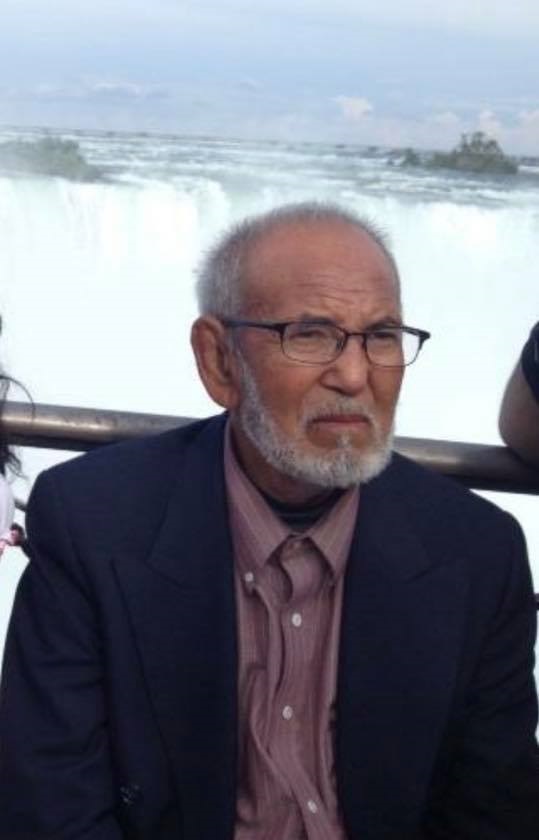
He started his revolutionary activities by participating in workers committee working under comrade Akram Yari. In later years he joined the Organization for Liberation of the People’s of Afghanistan. In his later years in life he remained a supporter of the Communist Party of Afghanistan and Communist (Maoist) Party of Afghanistan.
Bashi Bostan was ill in recent years. He passed away on December 22, 2017 after a long battle with illness and old age. We convey out condolences to all his comrades, all his family members and relatives.
His memories will remain with us.
Central Committee Communist (Maoist) Party of Afghanistan!
December 26, 2017
*********************
To the Communist Moist Party of France,
Dear comrades: 
We learned with great sadness that comrade Pierre, one of the leaders of your party, has passed away, at the age of 81. On the occasion of his passing away, the Communist (Moist) Party of Afghanistan and masses under the party leadership in national and new democratic organizations express our condolences to the Maoist Communist Party of France and all his friends and comrades and his life partner.
Comrade Pierre was a founder and a senior leader of the Maoist Communist Party of France. His death is not only a big loss for your party but is also a big loss for the international Maoist movement. Therefore, his memory will remain with the Maoist Communist Party of France, the international Maoist movement and all MLM parties in different countries including with the Communist (Moist) Party of Afghanistan and the revolutionary masses.
Let us keep comrade Pierre's memories alive and follow on his path!
Communist (Maoist) Party of Afghanistan
December 8, 2017
*********************
Celebrate the Fiftieth Anniversary of Naxalbari Armed AGRARIAN Revolutionary UPSURGE in all the rural areas with revolutionary enthusiasm and inspiration!
THE PATH OF Naxalbari is the only path for the
liberation of the oppressed masses of india!
Let us raze imperialism and feudalism to ashes in the fire of the
People’s War created by Naxalbari!
Let us make success the new democratic revolution!
continue
*********************
COMMUNIST PARTY OF INDIA (MAOIST) CENTRAL COMMITTEE - Celebrate the Fiftieth Anniversary of the Historic Naxalbari Armed Uprising - In India these Naxalbari's celebrations are from 23 to 29 May 2017, - International Day in the world starts the 20th May2017 - ICSPWI - info csgpindia@gmail.com -
- In India, the great Naxalbari peasant revolutionary armed uprising – which is going to complete its fiftieth anniversary – was influenced and inspired by the GPCR. Naxalbari was a path-breaking event under the leadership of comrade Charu Majumdar – one of the two great leaders, teachers and fore-founders of CPI (Maoist) comrades CM and KC – which marked a new beginning in the history of the country’s democratic revolution.
- this call is contained in the general Call of the Central Committee of CPI (Maoist) 16 March 2016
COMMUNIST PARTY OF INDIA (MAOIST) CENTRAL COMMITTEE
Celebrate the Fiftieth Anniversaries of the Great Proletarian Cultural Revolution (GPCR) and the Historic Naxalbari Armed Uprising, Centenary of the Earth-shaking Russian Socialist Revolution and the Bicentenary of the Birth of the Great Teacher of International Proletariat Karl Marx with Revolutionary Enthusiasm and Spirit!
Call of the Central Committee
16 March 2016
Dear comrades, friends of the Indian revolution, workers, peasants, toiling masses,
We are going to celebrate four historically significant world proletarian anniversaries within a short span of time. The Great Proletarian Cultural Revolution (GPCR) – which is completing its fiftieth anniversary this year – was an unprecedented revolutionary mass upsurge in socialist China led by Mao and the Communist Party. It aimed at bringing each and every sphere of the cultural superstructure in conformity with the country’s socialist economic base by arousing the vast working masses against bourgeois and other forms of reactionary culture. It involved a bitter class struggle against the entrenched capitalist-roaders, it was a continuation of the anti-revisionist struggle of the Great Debate and marked a new stage in the development of the Chinese Revolution.
continue
*********************
Red, Revolutionary, Internationalist May Day!
“The flag of the October Revolution is invincible!”
Mao Tse Tung.
This year marks the Centenary of the October Revolution. Imperialists, reactionaries, reformists, and all kinds of opportunists are making efforts to delete, obscure, denigrate and sully this event, as they did last year with the 50th anniversary of the Great Proletarian Cultural Revolution.
They do so because they know that the great message coming from these events for the proletarians and the masses is more and more present.
continue
*********************
The Resistance against Imperialist War in
Afghanistan must continue and grow
It has been fifteen years since the beginning of the US led imperialist aggression on Afghanistan. In the course of their aggressive and occupying war the American imperialists and its allies have committed numerous war crimes against our people. This imperialist war and criminal occupation in Afghanistan has not yet ended.
Barack Obama had announced that their war and criminal occupation would end in 2014. The occupying forces and their puppet regime with much ceremony and fanfare conducted a process of “transitioning of security responsibilities” and announced that the security forces of the puppet regime has now taken charge of the war and security responsibilities. But this so-called Afghanization of war did not mean the complete end of the imperialist occupation but was actually a mere change in the number of imperialist troops from 150 thousand to 15 thousand.
The security agreement between American imperialist occupiers and their puppet regime, which was a reminder of the agreements between the British colonialists and their Afghan satrap kings, was imposed on the country and its people and formalized the colonial status of Afghanistan. Based on this agreement the occupiers officially possess numerous strategic and long term military bases and have no restriction on dispatching any number of extra forces. Furthermore, the military attacks are being carried out also from outside of country such as from the military bases in Indian Ocean and even from the US itself.
Although certain imperialist and reactionary powers have withdrawn their forces from Afghanistan and yet these powers are still involved, directly or indirectly, and continue to support the American imperialist occupation of the country.
Therefore, the struggle against imperialist occupiers and their puppet regime not only has not ended, but is still in front of us as a prolonged struggle. In this situation the national revolutionary people’s resistance has the potential to transform into all-rounded resistance which could also attract the widespread support of public opinion within the imperialist countries, a support that is an important condition for forcing the imperialist occupiers to completely retreat and withdraw their entire forces from Afghanistan.
However, we should strive for the spread of the anti-war and anti-imperialist movement in Afghanistan and in imperialist countries themselves. These struggles can strengthen and widen the national revolutionary people’s resistance to imperialist wars in Afghanistan, the region and the world. The campaign against fifteen years of war in Afghanistan can and should be the new beginning for these struggles and its future development and spread into other imperialist countries particularly the occupying imperialist countries themselves.
Communist (Maoist) Party of Afghanistan
October 2016
*********************
To the central committee of the Revolutionary Communist Party of Canada!
Dear comrades!
We were deeply saddened upon learning about the untimely death of one of the leading cadre of the Revolutionary Communist Party, Nathalie Moreau. We express our deep condolences to her children, husband, all family members, relatives and her comrades in the party. We are especially saddened by the fact that comrade Nathalie has passed away at the very young age, 52. If cancer had not taken her from us, she would have had the capacity to further serve the revolution, communism, and the working class. Yet still her character and revolutionary solidity will remain a source of inspiration for all of us.
Let us turn the sorrow of her passing into energy for our struggle and through this keep her memory alive!
Central Committee of the Communist (Maoist) Party of Afghanistan
September 26, 2016
Nathalie Moreau (1964-2016) Sep 6th, 2016 Communiqué
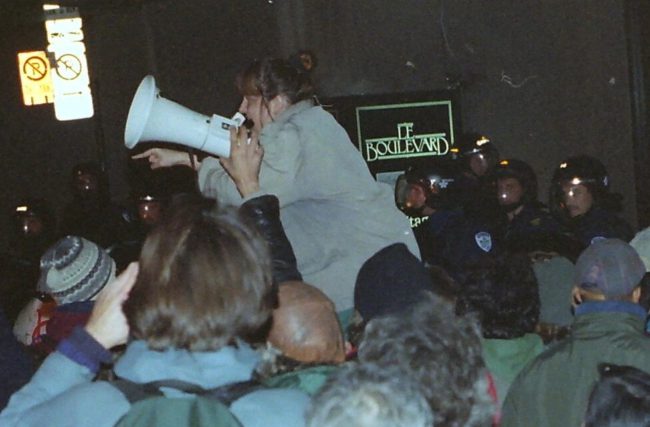
It is with great sadness that we announce the passing of our comrade Nathalie Moreau. Brilliant and dedicated activist, Nathalie passed away on September 5 surrounded by her family, victim of an ovarian cancer that was diagnosed a little less than four years ago. Our solidarity first goes to her relatives, her partner, children, siblings and other family members, as well as her countless friends, work colleagues, to those valiant women with whom she shared a similar condition since 2012 and of course to her comrades, who all lose an irreplaceable companion, a friend and a combatant. Nathalie had a lasting impact on the lives of all those who were fortunate to know her, in all spheres of activity in which she has been involved. For us who accompanied her in her militant life, she will remain a model of intelligence, courage and determination, an inexhaustible source of inspiration who will continue to embody the communist future for which we are fighting. We will announce soon how we intend to pay tribute to her.
Revolutionary Communist Party, Central Committee
*********************
Proletarians of all countries unite!
Long live the 50th anniversary of the Great Proletarian Cultural Revolution!
Long live the Proletarian World Revolution! Long live Maoism!
continue
*********************
COMMUNIST PARTY OF INDIA (MAOIST)
Dandakaranya Special Zonal Committee
Press Release
April 02, 2016
Fight against the aerial attacks on Bastar!
Make success the Dandakaranya bandh on the 15th April, 2016
For the past six months MI-17 war helicopters have been practicing firing and bombing drills in Sukuma, Dantewada and Bijapur of South Bastar in Chathisgarh. On the 1st of April top officials of the police and airforce announced in a press meet that in the situation where Maoists fire on the
continue
*********************
Call for an International week of action
2th-9th April 2016
Unconditional freedom for all political prisoners in India!
Solidarity with all political prisoners in the world!
Stop Green Hunt, the war and aerial attacks on the people!
Support the People’s war in India!
In India more than 10.000 political prisoners are languishing in jails. They are leaders, cadres and members of the CPI (Maoist) and PLGA; Adivasi villagers who resisted the forced evacuation; peasants who struggled against the MOUs signed by governments and TNCs to exploit the people and continue the imperialist looting of natural resources; activists of the national minorities organized against the rising threat of Hindu communal fascism; intellectuals
continue
*********************
Indian Blockade and Nepalese Maoists
Rishi Raj Baral
At the outset, I would like to inform that, since two months, we Nepalese people are facing ruthless economic blockade, imposed by the Indian expansionism. Indian fascist government wants Nepal to be under his control like Bhutan, a small landlocked country of South East Asia.
continue
*********************
Statement of the Communist (Maoist) Party of Afghanistan on the 50th anniversary of the founding the communist movement of Afghanistan:
Let us celebrate the fiftieth anniversary of the founding of the communist (Marxist-Leninist-Maoist) and new democratic movement of Afghanistan for the purposes of strengthening the current communist and new democratic struggles in the country!
continue
*********************
Support the People's War in India
*********************
Ideological Bankruptcy of Baidhya Faction
Rishi Raj Baral
“We will join hands with the government to support the ongoing rescue, relief and reconstruction and rehabilitation operation.’’ Mohan Baidhya ‘Kiran’
continue
*********************
Baidhya following the step of Prachanda by The Next Front
A ‘18 points leaflet’ was distributed during the two line struggle with Prachanda clique. At that time Prachanda was pleading for the New Democratic Revolution. But, after the 7th National Congress of UCPN(Maoist) , Prachanda clique abandoned the political line of New Democratic Revolution and passed the line of socialism with peaceful transition. It means taking part in the bourgeois election and exercising the parliamentary system. But it is a matter of surprise that, Mohan Baidhya who is ‘pleading’ for the New Democratic Revolution, has signed a joint statement with Prachanda, addressing him as a revolutionary leader.
continue
*********************
Message from the Committee in Support of the People’s War in India (Afghanistan-Pakistan)
Dear comrades,
Unfortunately, due to circumstances beyond our control, we are unable to directly participate in this meeting. Though, this meeting is being held at a very critical time. The reactionary Indian state under the leadership of Hindu fascists has intensified its repression against the masses of the people and the revolutionary people’s war in India. A new and more brutal phase of the Operation Green Hunt is underway, which in the words of Arundathi Roy is a “scorch the earth” war of burning entire villages, wholesale murder, rapes, and other despicable crimes against humanity.
continue
*********************
 COMMUNIST PARTY OF INDIA (MAOIST)
DANDAKARANYA SPECIAL ZONAL
Press Release
May 6th, 2015
A call to the people to fight back the new form of salva judum and the supportive organization of green hunt, salwa judum-2
The son of Mahendra Karma who died in the Jeeramghati ambush in the hands of PLGA, Chavindra karma and one of the gang leaders of first salva judum and goonda Chaitram Attami and others announced on the 5th of May that they would start salva judum
*********************
Communist Party of Peru
IN THE 35 ANNIVERSARY OF THE PEOPLE'S WAR IN PERU
"In the social struggle, the forces representing the advanced class sometimes suffer from a failure, but not because their ideas are incorrect, but that in the correlation of forces in struggle, advanced forces are not so powerful so far as the reactionary and thus fail temporarily, but will reach eventually provided successes. " Chairman Mao Tsetung
*********************
Fight for the Release of Comrade Ajith
The reactionary Indian state under the leadership of Modi led Hindu fascist government added another crime to its long list of crimes against humanity. On May 9, this year India’s so-called ‘Anti-terrorism Squad’ stormed a hospital in Pune, Maharashtra state, and arrested an ailing revolutionary intellectual, political activist, and a prominent thinker of the Indian left, comrade Ajith for the crime of belonging to the Communist Party of India (Maoist), and dedicating his entire life to the struggle against class, caste, gender, national, and imperialist oppression and for revolution and social justice.
continue
*********************
Press statement
30th April, 2015
Real rupture with the liquidations
Rishi Raj Baral, Central Committee Member of CPN-Maoist
At the outset, I would like to announce that from today, I came to the point of real rupture with the Communist Party of Nepal-Maoist, led by Mohan Baidhya 'Kiran'.
continue
*********************
Proletarians of all countries unite!
Red and Internationalist May Day!
Crises, wars, repression, oppression, unemployment, poverty!
Proletarians and oppressed people, let us unite and take the future in our hands!
Long live .... Revolution!
continue
*********************
Communist Party of India (Maoist )
Central Committee
International Department
January 2, 2015
To
Central Committee,
Communist (Maoist) Party of Afghanistan.
Dear Comrades,
We humbly pay homage to the martyrs of the Afghanistan revolutionary movement, in particular to your Central Committee member comrade Aziz. The sacrifices made by these heroic proletarian fighters will forever remain a source of inspiration to the people.
The successful completion of the Second Congress of your party is a joyful and inspiring event. On behalf of our Central Committee, the People’s Liberation Guerrilla Army, the Revolutionary People’s Committees and the revolutionary masses we greet you with a resounding Lal Salam on your grand achievement.
The Maoist movement of Afghanistan has a long history. You represent that revolutionary tradition and continue to take it forward. Afghanistan is situated at a key point, connecting Central and South Asia. Politically, it is of immense importance as a warfront against imperialism, particularly US imperialism. This is even more so because the red banners of the international proletariat contest for the vanguard role in this war with religious ideologies that pull the people backward. The success of your party in tackling and resolving this complex situation and victoriously advancing the new democratic revolution will play a very important role in unleashing the revolutionary potential of these regions. We look forward to learning from the lessons summed up in your Congress and wish you all success in advancing along the line it has laid down.
In conclusion, we cherish the internationalist views expressed in your statement hailing the recent advance in the unity of Maoists in our country and enthusiastically reciprocate its warm sentiments.
with revolutionary greetings,
Arun
International Department,
Central Committee,
Communist Party of India (Maoist)
*********************
Statement on the second congress of the Communist (Maoist) Party of Afghanistan
The second congress of the Communist (Maoist) Party of Afghanistan (CmPA) was successfully held. This congress took place ten years after the unity congress of the communist (Marxist-Leninist-Maoist) movement of Afghanistan that secured the merger of the Struggle Organization for the Liberation of the Peoples of Afghanistan, the Revolutionary Workers Alliance of Afghanistan, and the Communist Party of Afghanistan, into a united party: the CmPA.
Continue
*********************
Dear comrades,
with deep sadness, the Maoist Communist Party – Italy (PCm Italia) shares your grief for the death of Comrade Aziz.
We unite our hands to yours, to all the members and supporters of the Party and to the family of the deceased comrade, expressing our condolence.
A comrade who spent his life serving the people, fighting reactionaries and imperialists, resisting betrayals of revisionists and opportunists and struggling to unite MLMs in the Maoist Party, is a precious and inspiring example, not only for the people who gave him birth but for all comrades and people committed to the same struggle.
His lesson will live forever in our common struggle of proletarian revolutionaries for the world proletarian revolution and communism.
PCm Italia, CC
3.9.2014
*********************
Message from MRL Sri Lanka to PCAfghanistan maoist on the occasion of the death of Com. Aziz
Dear comrades,
We, the maoist revolutionary League one of the maost group of Sri Lanka share your deep condolence on behalf of the death of comrade Aziz. Revolutionary communist in the whole world are engaging in unstopable for liberation of the whole world. Comrade aziz is a one of the militant in that great struggle. He is a comrade who impelemnted “Serve to people” slogan in his revolutionary life. He serve to Communist movement in afghanisthan and in the world by fighting against rightist tendencies and reactionaries and also giving his best effort to build up revolutionary movement in afghanistan.
We pay our condolence to centrel commitee of the Communist (Maoist) Party of Afghanistan, and its all the cadres, supporters and family members of com. Aziz.
The international proletarian revolutionaries will pay homage to Comrade Aziz by carring out responsibilities in the world wide revolutinary struggle and sooner or later they will win dream of com. Aziz of world socialist revolution.
Lal Salam Com. Aziz!!!
Long Live Proletariet internationalism!
Long Live Marxism Leninism Maoism!
***********
Nota –El Comité Central del Partido Comunista (Maoísta) de Afganistán ha hecho pública una declaración anunciando el fallecimiento el pasado 25 de julio del Camarada Aziz, miembro de su Comité Central.
Desde nuestro blog, Gran Marcha Hacia el Comunismo envía a todos los camaradas del Partido Comunista (Maoísta) de Afganistán su más sentido pésame por la pérdida de este destacado camarada, ejemplo de luchador comunista revolucionario, cuyo nombre y vida ejemplar son imborrables.
Reproducimos a continuación la Declaración del Comité Central del Partido Comunista (Maoísta) de Afganistán que con este motivo fue publicada en su página web Shola Jawid http://www.sholajawid.org y que Gran Marcha Hacia el Comunismo hemos traducido al español:
DECLARACIÓN DEL PARTIDO COMUNISTA (MAOÍSTA) DE AFGANISTÁN
CON OCASIÓN DEL FALLECIMIENTO DEL CAMARADA AZIZ, MIEMBRO DEL COMITÉ CENTRAL DEL PARTIDO COMUNISTA (MAOISTA) DE AFGANISTAN
Con inmenso dolor, el Comité Central del Partido Comunista (Maoísta) de Afganistán anuncia el fallecimiento de uno de sus miembros, el Camarada Aziz.
El Camarada Aziz inició su activismo revolucionario como joven proletario en las filas del movimiento de nueva democracia (el Movimiento Sholajawid) en los años 60. Tras el colapso del Movimiento Sholajawid, no se unió a ninguna otra organización de izquierda hasta los años 80, aunque mantuvo su espíritu Shola’ite y permaneció siendo un militante antirreaccionario y antiimperialista. En 1980, antes de la formación de la Organización de Liberación Popular de Afganistán [SAMA], el Camarada Aziz se unió a una de las facciones que participaron en la formación de SAMA. Sin embargo, antes de su creación e inmediatamente después de los alzamientos de masas contra el régimen del Partido Democrático del Pueblo de Afganistán [PDPA], nuestro camarada se trasladó al campo en la remota provincia de Bamyan, donde había nacido, con el fin de participar en la lucha popular contra el golpe revisionista y los sátrapas socialimperialistas. Permaneció en el campo hasta 1982, abandonándolo solamente cuando las fuerzas islamistas tomaron control de la zona y cuando él y sus camaradas fueron apuñalados por la espalda por los capitulacionistas dentro de SAMA.
Consecuentemente, el Camarada Aziz permaneció activo en la diáspora como un cuadro de SAMA sección Gharjistan, continuando su lucha contra la línea capitulacionista dentro de SAMA. En el verano de 1991, tras varios años de reuniones e intercambio de puntos de vista con la Célula Comunista Revolucionaria de Afganistán, nuestro Camarada se unió al Partido Comunista de Afganistán, emitiendo una declaración sobre su decisión. En el exilio, nuestro camarada continuó su activismo político y organizativo. Durante varios años fue responsable de diversos programas educativos de masas. El camarada Aziz fue un maestro practicante de Taekwondo y entrenó a muchas personas en este deporte.
EL Camarada Aziz combatió la línea capitulacionista de derecha dentro del Partido Comunista de Afganistán, y adoptó una firme posición en la defensa de la línea del partido, de su Programa y Constitución. Por tanto, cuando el proceso de unidad del movimiento comunista (marxista-leninista-maoísta) se inició en Afganistán, Aziz se unió y defendió el proceso con celo revolucionario.
El Camarada Aziz participó en el congreso de unidad con entusiasmo revolucionario y fue elegido para formar parte del Comité Central. En 2004, Aziz dirigió valerosamente la campaña de boicot a las elecciones en esta zona, enfrentándose inquebrantablemente a las amenazas e intimidación de los reaccionarios. Aunque cuando, debido a una enfermedad, quedó seriamente débil, aún hizo el máximo posible para participar en las actividades del Partido. Otros camaradas siempre se estimularon observando su espíritu revolucionario. Pese a su grave enfermedad, nuestro camarada participó en el Noveno Pleno del Partido –asumiendo un largo y difícil viaje a fin de estar presente- pero, desafortunadamente, no pudo participar en el Décimo Pleno que se celebró hace pocos meses.
Hace dos meses, el Camarada Aziz sufrió otro ataque al corazón y su salud se deterioró. Luchó contra su enfermedad en los pasados dos meses, pero hoy, a la edad de 68 años, ha fallecido.
El Comité Central del Partido Comunista (Maoísta) de Afganistán expresa sus profundas condolencias a todos los militantes y simpatizantes del Partido, a otros maoístas del país y partidos y organizaciones maoístas del mundo, y a la familia del camarada fallecido. El movimiento revolucionario proletario en Afganistán y el movimiento proletario revolucionario internacional recordarán a este proletario revolucionario, transmitiendo su experiencia y las lecciones que enseñó su vida a las generaciones futuras.
Comité Central, Partido Comunista (Maoísta) de Afganistán
25 Julio 2014
**************
Statement of the Communist (Maoist) Party of Afghanistan:
On the occasion of the death of comrade Aziz, member of the Communist (Maoist) Party of Afghanistan's central committee
With immense grief, the central committee of the Communist (Maoist) Party of Afghanistan announces the passing of one of its members, comrade Aziz.
Comrade Aziz began his revolutionary activism as a proletarian youth in the ranks of the new democratic movement (the Sholajawid Movement) in the 1960s. After the collapse of the Sholajawid Movement, he did not join another leftist organization until 1980. Though he preserved his Shola’ite spirit and remained an anti-reactionary and anti-imperialist militant. In 1980, before the formation of Peoples Liberation Organization of Afghanistan [SAMA], Comrade Aziz joined one of the factions that participated in the formation of SAMA. However, before this formation and immediately after the mass uprisings against the People's Democratic Party of Afghanistan [PDPA] regime, our comrade moved to the remote countryside of the Bamyan province, the place of his birth, so to participate with the peoples' struggle against the revisionist coup and the social-imperialist satraps. He remained in the countryside until 1982, leaving only when the Islamist forces took control of the area, when he and his comrades were back-stabbed by the capitulationists within SAMA.
Consequently, comrade Aziz remained active in the diaspora as a cadre of SAMA Gharjistan chapter, continuing his struggle against the capitulationist line within SAMA. In the summer of 1991, after several years of meetings and exchanges with the Revolutionary Communist Cell of Afghanistan and the Revolutionary Communist Organization of Afghanistan, our comrade joined the Communist Party of Afghanistan, releasing a statement regarding this decision. In exile our comrade continued his political and organizational activism; for several years he was responsible for several mass educational programs.
Comrade Aziz was a master practitioner of Taekwondo and trained many people in the field.
Comrade Aziz fought against the right capitulationist line within the Communist Party of Afghanistan, and took a strong stance defending the line of the Party Program and Constitution. Therefore, when the process of the unity of the communist (MLM) movement of Afghanistan began, Aziz joined and defended the process with revolutionary zeal.
Comrade Aziz participated in the unity congress with revolutionary enthusiasm and was elected to the central committee. In 2004, Aziz courageously led the election boycott campaign in his area, unflinchingly facing threats and intimidation from the reactionaries. Although when, due to illness, he had become extremely weak, he still did his best to participate in party activities. Other comrades were always energized by observing his revolutionary spirit. Despite his serious illness, our comrade participated in the ninth plenum of the party––undertaking a difficult and long journey in order to be present––but, unfortunately, could not participate in the tenth plenum that took place a few months ago.
Two months ago comrade Aziz had another heart attack and his health deteriorated. He struggled against his illness in the past two months but today, at the age of 68, he passed away.
The central committee of the Communist (Maoist) Party of Afghanistan expresses its deep condolences to all the members, supporters of the party, other Maoists of the country and Maoist parties and organizations of the world, and to the family of the deceased comrade. The proletarian revolutionary movement in Afghanistan and the international revolutionary proletarian movement will remember this revolutionary proletariat, passing on his experience and the lesson taught by his life to future generations.
Central Committee, Communist (Maoist) Party of Afghanistan
July 25, 2014
**************
Statement of the Communist (Maoist) Party of Afghanistan on the merger of the Maoist parties in India:
Long Live the Unity of Maoist Parties in India
With great joy and jubilation we warmly welcome and congratulate the Communist Party of India (Marxist-Leninist) Naxalbari's merger with the Communist Party of India (Maoist). We firmly believe that this principled and necessary step by Indian comrades will have a positive impact not only in India, but also in the surrounding region.
Continue
**************************
 Communist Party of India (Maoist)
Central Committee
__________________________________
May 1, 2014
Merger Declaration of CPI(Maoist) and CPI(M-L)Naxalbari
Hail the Merger of the Maoist Parties in India into a Single Party!
(Released to the press by comrades Abhay and Krantipriya, spokespersons of the respective parties)
continueــــــــــــــ word
**************************
Another May Day Comes …
Another May Day comes, in a world where the misery and deprivation suffered by billions of people is immensely aggravated by the prolonging crisis of the imperialist system. Millions have been thrown out of jobs. Social security is cut down. Growing price rise further depresses living standards. Medical treatment and higher education become atrociously expensive. Meanwhile the perpetrators of this merciless system workout even more vicious anti-people measures, all the while obnoxiously flaunting their swelling wealth and boasting of billionaire lists.
continue
**************************
Let’s Boycott the Elections that would determine the prime national-traitor from the list of national traitors!
The puppet regime’s third presidential election possesses particular importance. In this election the person who would be chosen as the president of the puppet regime will sign the Bilateral Security Agreement (BSA) with the American imperialist occupiers and become the regime's main implementer of the agreement for the next five years. Whoever wins the position of the prime national-traitor, will not change the anti-patriotic, anti-national and anti-people orientation of the puppet regime following the election. All candidates running in this election have already announced that they would sign the agreement with the American imperialists.
continue
**************************
Statement of the Communist (Maoist) Party of Afghanistan on the Bilateral Security Agreement between the American imperialists and the Puppet Regime:
Bilateral Security Agreement and the Imposition of a Prolonged and broad Resistance on the People of Afghanistan
On November 21, 2013 the puppet regime convened its fourth sham Loya Jirga. The first Emergency Loya Jirga was held to endorse the imperialist invasion and subsequent occupation of Afghanistan and the enslaving decisions of the gathering of the national traitors in Bonn held under the plumage of the invading imperialists for approving the puppet regime of Hamid Karzai. The second Loya Jirga was held to ratify the colonial constitution; the third Loya Jirga was held to approve the Strategic Agreement between the American imperialists and its satraps. The issue for the current and fourth Loya Jirga, then, is the signing of the Bilateral Security Agreement which will grant strategic military bases to the American occupiers and its imperialist allies in Afghanistan. Formally, the imperialist occupation and the colonial condition of the country will be prolonged for many years to come.
Thus, the regime that in the eleven years of its shameful existence has held two fraudulent general presidential and parliamentary elections, and has upholding the feudal institution of Loya Jirgas four times, has served the objectives of the imperialist occupiers––all of these elections and Loya Jirgas have been orchestrated to nurture the puppet regime. Hence, the country's condition is colonial and semi-feudal. Colonial in the sense that the fate of Afghanistan and its people is ultimately determined by the imperialist occupiers. Semi-feudal in the sense that the reactionary ruling classes forming the puppet regime possess both feudal and bourgeois comprador characteristics in a proportion similar to the ratio between the Loya Jirgas and the sham elections.
In fact, since the inception of the disgraceful puppet regime, Loya Jirgas, and not the fraudulent and sham elections, have been the real source of decision making. Now the occupying imperialists, through their imported feudal and bourgeois comprador democracy, are holding a Loya Jirga to earn legality and legitimacy for their occupation under the name of the people of Afghanistan. However, our people clearly understand that the overwhelming majority of the participants of the Loya Jirga have been carefully selected by the occupiers and the upper brass of the puppet regime, bought with hundreds of millions of dollars, to approve and ratify the continued existence of the occupying forces and consequently ensure this regime's survival and continuation. Therefore, we cannot call the decisions of such a gathering the expression of the free will of the people of Afghanistan.
Additionally, this Loya Jirga is intended to formalize the conditions that have been in existence for the past eleven years with the explicit agreement of the puppet regime––conditions that are this regime's source of vitality. Although the legal immunity of the occupying forces has been, without exception, an informal fact since the beginning of the invasion and occupation, in the past year the puppet regime has only now made this an issue of contention so as to cast itself as independent and nationalist The puppet regime's fictitious independence, and its opposition to the killings of civilians and intractable military operations, is nothing new. But such exhibitions have never stopped the murder of civilians, nor have they curtailed the reckless military operations of the occupying forces.
The reality, despite all phony political shows, is the presence of the occupying forces and the colonial condition of the country under occupation. Such a condition can take various forms and configurations, as well as different levels of intensity; no cunning, deception or masquerades can remove its objective and subjective effects.
Right now a legal opposition to the granting of legal immunity to the occupying forces has been constructed; it will be brought to the Loya Jirga so as to play a “democratic” role. The participants of this so-called opposition have divergent incentives. The objections of some of members of this opposition are intended as a bargaining chip for gaining a better colonial agreement. Others oppose the agreement simply because they are afraid of being targeted by the armed opposition; otherwise they do not have any disagreement. Others are those who are consciously playing the role of opposition in order to complete the political drama. Then there is a fourth section of this legal opposition that consists of those who are under the delusion that if they oppose the legal immunity for the occupying forces they will perform their patriotic and national duty––only these participants of the Loya Jirga can be addressed so as to challenge their delusions and convince them not to commit national treason with good intentions.
The Communist (Maoist) Party of Afghanistan proclaims that it is fundamentally against any security pact with the American imperialist and other imperialist powers, just as it is against the continued presence of the occupying forces in the country. We believe that signing any security agreement with the American imperialists and other imperialist powers, and agreeing to the continued presence of the occupying powers at whatever level and for whatever duration is to also agree with the occupation and colonial condition of the country––it is nothing other than national treason.
We proclaim that the current Loya Jirga, put together by the occupying imperialists and their satraps, has no normative basis for being the representative of the people of Afghanistan; it is only a gathering for executing another national treason, following previous national treasons, particularly the treason of the consultative Loya Jirga on the strategic agreement with the American imperialists.
We proclaim that the security agreement between the American imperialists and the puppet regime, that would result in the continuing presence of American strategic military bases in the country, imposes a prolonged and comprehensive resistance on the people of Afghanistan based upon the revolutionary and peoples national armed resistance and for the purpose of forcefully throwing out the occupiers and bringing down the puppet regime.
Down with the occupying imperialists and their puppet regime!
Advance towards launching and carrying forward a prolonged revolutionary and national people’s war of resistance!
Communist (Maoist) Party of Afghanistan
November 21, 20
**************************
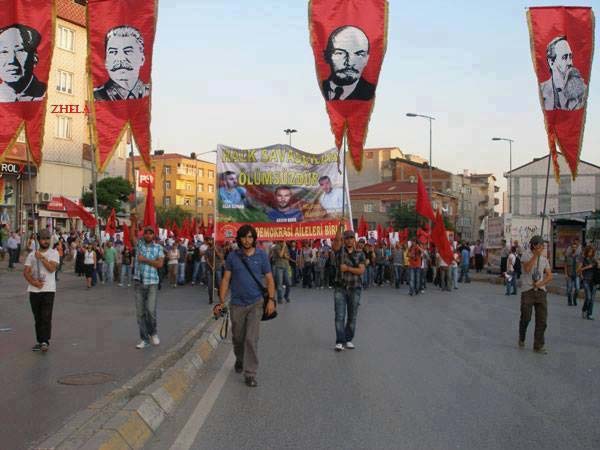
Statement of the Communist (Maoist) Party of Afghanistan on the ongoing mass protest in Turkey:
Long Live Turkey’s Revolutionary Mass Movement
Turkey, the "island of stability" in the Middle East, has been engulfed by a storm. While almost all Arab countries in Asia and north Africa were inundated by the “Arab Spring”, Turkey not only seemed stable, but its regime was viewed as a model of a “moderate and democratic” Islamic state worth replicating by the Islamists in Arab countries––particularly in Egypt and Tunisia. The reactionaries in Arab countries and the American and European imperialists raised this model of Islamism in opposition to the Islamism of the al-Qaeda variety, as well as in opposition to the revolutionary movements in Arab countries, in order to mix the religious sentiments of the masses in these countries in a blend of feudal-bourgeois compradorism dependent on, and in the service of, the interests of America and the west.
The series of ongoing mass movements in Turkey began with a small spark. On May 28 a small collective of environmentalists peacefully protested the plans of the government of the Justice and Development Party (AKP) to demolish part of the Gezi park situated in Taksim square in Istanbul and transform it into a shopping-mall. However, the repressive police force of the so-called democratic Islamist government of the AKP heavy-handedly suppressed this small and peaceful protest and on the night of June 1, attacking and burning the tents of the protesters.
The masses in Istanbul from June 1 stood against this “democratic repression” and started a widespread protest movement. The repressive police force again cracked down on the demonstrators, wounding hundreds and maybe thousands of people. However, the series of demonstrations not only did not subside but spread to other cities in Turkey; several big trade unions, teachers, artists and many others have joined the movement.
Now the demands of the demonstrators has gone beyond the demands of the initial demonstration. Now they are demanding the resignation of the Prime Minister and the trail of the repressive police officers; even the apologies of the deputy Prime Minister has not been enough to calm down the protests.
The obvious difference between the mass protest movement in Turkey and the protest movements in other Middle Eastern and North African countries is that the movement in Turkey is leftist and secular and the Islamist forces do not play a signficant role. This movement has been ignited by environmentalists and supporters of the leftist movement in Turkey. Therefore, this movement can and should protect, even expand and deepen, its leftist and secular orientation, but on the condition that the leftist and communist forces, while struggling to preserve the movement's unity, should not forget their independent demands and slogans; they should strive for the further radicalization of the protest movement.
This movement has the potential capacity to prepare the ground for a revolutionary movement capable of overthrowing the entire reactionary system in Turkey. However, transforming this potential capacity into revolutionary activity is the duty and responsibility of concious revolutionary proletarians. Revolution will not materialize spontaneously without hard and continuous struggles and fights.
The AKP has been in power in Turkey for a decade; it is an Islamist party that acts in alliance and unity with (or, more accurately, in dependency and servitude to) western imperialists, particularly the American imperialists. The current government in Turkey not only acted in unity with NATO’s onslaught in Libya, but it is also the main supporter of the insurgents dependent on the western imperialists in Syria. This government has also participated in the imperialist invasion of Afghanistan: the Turkish presence in Afghanistan is not only the largest force of an “Islamic country” engaged in imperialist occupation, it also plays an important role in training the puppet regime's repressive police.
Therefore, we view and welcome the current mass protest movement in Turkey, even at its current level, a movement towards weakening the regional gendarme of the western imperialists and one of the foreign occupying countries in Afghanistan. Moreover, in light of the current role of the Turkish forces in Afghanistan and the political and economic role of Turkey in Afghanistan, the ongoing revolutionary struggle in the two countries, objectively and subjectively, are very closely interlinked. Therefore, the advancement of every revolutionary movement in Turkey will have immediate and direct repercussions in Afghanistan, further stimulating the revolutionary movement in this country.
The Communist (Maoist) Party of Afghanistan therefore welcomes the participation of the Turkish Maoist forces in the ongoing protests in that country, applauds the struggles of these comrades to give the movement a revolutionary direction, and wishes increasing success for these comrades.
Communist (Maoist) Party of Afghanistan
June 8, 2013
Let’s Boycott the Elections that would determine the prime national-traitor from the list of national traitors!
The puppet regime’s third presidential election possesses particular importance. In this election the person who would be chosen as the president of the puppet regime will sign the Bilateral Security Agreement (BSA) with the American imperialist occupiers and become the regime's main implementer of the agreement for the next five years. Whoever wins the position of the prime national-traitor, will not change the anti-patriotic, anti-national and anti-people orientation of the puppet regime following the election. All candidates running in this election have already announced that they would sign the agreement with the American imperialists.
**************************
Internationalist May First: Joint Statement
The popular masses want to overthrow the capitalist, imperialist governments and the governments who are their servants!
Proletarians want to unite for the Party of the revolution!
Communists support anti-imperialist struggles and develop People’s Wars for the world proletarian revolution!
Imperialism is the "highest stage of capitalism” —a stage of “parasitism and decay” (Lenin,Imperialism, the Highest Stage of Capitalism). Now is the time to bury it, as soon as possible. The crisis of capitalism is like a chronic disease that torments it. It creates the grounds for its death.
The crisis of capitalism is above all a crisis of overproduction: “In these crises, there breaks out an epidemic that, in all earlier epochs, would have seemed an absurdity —the epidemic of over-production. Society suddenly finds itself put back into a state of momentary barbarism.” (Marx andEngels, The Communist Manifesto)
continue
**************************
Report from a general meeting of the supporters of the Communist (Maoist Party of Afghanistan in Canada
A general meeting of the supporters of the Communist (Maoist) Party of Afghanistan in Canada, with the presence of party representatives, was held in December 2012.
At the start of the meeting, the party representatives briefed the party supporters on the situation in Afghanistan and the situation of the international communist movement––particularly the struggles of the Marxist-Leninist-Maoist parties including the C(M)PA for the formation of a new international communist organization
continue
**************************
A Documentary Summary Analysis of the Communist Party of Nepal-Maoist
It seems that the initial optimism about a profound and comprehensive position by the faction under Kiran’s leadership within the Unified Communist Party of Nepal-Maoist [UCPN-M]––the faction that, after the “national convention of the revolutionary faction of the Unified Communist Party of Nepal-Maoist” in June 2012, has emerged as the Communist Party of Nepal-Maoist [CPN-M] against Prachanda-Bhattarai revisionism––did not have a strong basis. Despite the CPN-M's recent congress we have not received or been able to study the documents it produced. Thus, we do not deem it necessary to produce a final and detailed conclusion regarding this party. However, even with close scrutiny of the CPN-M's pre-congress we can find particular ideological and political positions that indicate the repetition of the deviations of the UCPN-M in a different form and shape.
In the following paragraphs we will discuss the important deviations revealed in the pre-congress documents of the CPN-M.
continue..
**************************
We must be ready for a prlonged and tough resistance against the occupiers and their national traitor satraps
It has now become apparent that announcing the withdrawal of the occupying imperialist forces from Afghanistan at the end of 2014 is nothing more than a ludicrous drama that masks the continuation of the occupation and the rule of the national traitor puppet regime in a different form and shape. What is of essential and strategic importance here is the condition of the imperialist occupation and the rule of the puppet regime, not the formal changes in the legal aspects of this occupation. To a certain extent, these formal changes can only have tactical and sometimes operational significance.
**************************
Report of a meeting of Supporters of the Communist (Maoist) Party of Afghanistan in Europe
On December 2012 a meeting of the supporters of the Communist (Maoist) Party of Afghanistan [C(M)PA] in Europe, in the presence of representatives of the party, was held as part of the overall campaign to rectify the party’s style of work.
Representatives of the C(M)PA attending the meeting briefed the party supporters on the situation in Afghanistan, the international communist scene––particularly on the efforts of the Marxist-Leninist-Maoist parties, including the C(M)PA, to form a new international communist organization of the Marxist-Leninist-Maoist parties and organizations throughout the world.
continue...
**************************
The following is the speech delivered by the representative of the Communist (Maoist) Party of Afghanistan at the international conference in support of the people’s war in India, held on November 24, 2012 in Hamburg, Germany. Delegations representing revolutionary organizations and parties from more than 25 countries participated at the event. |
Comrades!
On behalf of the Communist (Maoist) Party of Afghanistan I congratulate the organizers of this important internationalist event. This conference, in support of the revolutionary war in India, with the presence of delegations from revolutionary organizations and movements from tens of countries from around the world, is a great example and expression of proletarian internationalism.
**************************
A Response to the RCP-USA's May 1st 2012 Letter
PREFACE
The Revolutionary Communist Party - USA’s [RCP-USA] May 1st Letter (Letter to Participating Parties and Organizations of the Revolutionary Internationalist Movement) is, after its new Constitution and Manifesto, the third most important party document regarding “Avakian’s New Synthesis.” Although this document was initially intended to be an internal letter addressing the members of the Revolutionary Internationalist Movement [RIM], the RCP-USA reversed its earlier decision and published the letter publicly without a clear explanation.
We believe this whole game of internally addressing only the participants of RIM was an unnecessary theatrical show from the very beginning. There is no reason to pursue an internal RIM discussion around issues that have been public for several years––issues that were made into a public matter first and foremost by the RCP-USA itself.
**************************
Actively Participate in the Campaign and Conference in Support of the Peoples War in India!
On November 24, 2012 an international conference is being held in Hamburg Germany as part of a week long international campaign in support of the people’s war in India. Currently, the peoples war in India, led by the Communist Party of India (Maoist) is the most advanced revolutionary movement in the world. It is increasingly becoming a beacon of hope for the entire revolutionary forces around the world.
**************************
Support the People`s War in India!
The bosses of world imperialist system carry out an offensive against the peoples of the world. Imperialist wars of aggression as those against Iraq, Afghanistan and Libya, mark the beginning of the century. They prepare the next war against Syria, Iran or any other, because one thing is certain, that they are not going to stop voluntarily. At the same time, they impose on people the consequences of the crisis, especially on the peoples in the oppressed nations, but also in the imperialist countries themselves, the working class is constantly trampled and their fundamental rights are quickly stolen away. In this situation, fascism is not a nebulous threat, but an active force.
**************************
To
Central Committee,
Communist (Maoist) Party of Afghanistan
Dear comrades,
We condole the death of comrade Hafiz, a veteran Maoist and staunch proletarian internationalist. He is remembered by us, especially for his effort to ensure the success of the historic Expanded Meeting of the RIM, which adopted Marxism-Leninism-Maoism as its ideological guide.
Today your party and the world Maoist forces are faced with great ideological and political responsibilities in the fight against new brands of revisionism such as Avakianism and Prachanda-Bhattarai right opportunism. The loss of such an experienced and capable comrade at this juncture is no doubt a big blow. The dedication and commitment brought by comrade Hafiz to his communist tasks remain with us as an inspiration to overcome it.
Through you we express our sorrow to comrade Hafiz’s family and to all the members of your party.
With revolutionary greetings,
Central Organising Committee,
Communist Party of India (Marxist-Leninist) NAXALABARI
October 22, 2012
****************
Central Committee
Communist (Maoist) Party of Afghanistan
Comrades,
We have learned of the death of Comrade Hafiz, an outstanding member of your heroic Party.
The contemporary communist movement owes much to the work of Comrade Hafiz and its proletarian strong position within the Revolutionary Internationalist Movement (RIM). Comrade Hafiz was a strong Marxist-Leninist-Maoist, who played an important role both in his country as well as in the correct definition of Maoism as the third and higher stage of the proletarian ideology developed by Marx, Engels, Lenin and Stalin.
We want to express our sincere sadness for the loss of this proven revolutionary leader of the Afghan people and tireless internationalist. Now, his example will be a new flame that will illuminate the road of World Proletarian Revolution.
The men and women who fight in Galicia (an oppressed nation within the Spanish State) to build the Maoist Communist Party of Galicia, pay a heartfelt tribute to Comrade Hafiz.
Convey our respect and affection to his comrades and family.
Revolution will triumph in Afghanistan!
Imperialist invaders out of Afghanistan!
Galicia, October 2012
Construction Committee
Maoist Communist Party- Galicia
correovermello noticias
Información de la Revolucion Proletaria Mundial
saudos vermellos / saludos rojos
****************
PCm italy expresses red salutation to the Communist(Maoist) Party of Afghanistan for the death of comrade Hafiz
His history is a true exemple of communist and internationalist in communist mouvement in Afghanistan and in the world.
Honour and Glory to Comrade Hafiz
long live to Communist(Maoist) Party of Afghanistan
PCm Italy
central commitee
11 october 2012
****************
Au Parti Communiste (maoïste) d'Afghanistan,
Chers et chères Camarades,
C'est avec tristesse que nous avons appris la mort du Camarade Hafiz. Parce que nous sommes des internationalistes prolétariens, nous considérons chaque perte pour le mouvement maoïste d'un pays comme notre propre perte.Tout particulièrement avec votre Parti avec lequel nous avons signé la déclaration commune du 1er Mai 2012.
En tant que dirigeant révolutionnaire, le Camarade Hafiz inspirera une nouvelle génération et les graines révolutionnaires qu'il aura semé durant toute sa vie fleuriront avec certitude.
Toutes nos condoléances à l'ensemble du Parti Communiste (maoïste) d'Afghanistan, à ses sympathisants, à la famille et à ses proches.
Parti Communiste maoïste de France
To the Communist (maoist) Party of Aghanistan,
Dear Comrades,
It is with deep sadness that we learnt the death of Comrade Hafiz. Because we are proletarian internationalists, we consider every loss for the maoist movement of a particular country as our own loss. Especially with your party as we signed the joint 2012 May 1st Declaration.
As a revolutionary leade, Comrade Hafiz will inspire a new generation and the revolutionary seeds he sowed during his entire life will undoubtely blossom.
Our condoleances go to the entire Communist (maoist) Party of Aghanistan, to its sympathizers, to his familiy, relatives and friends.
Maoist Communist Party of France
Une réunion spéciale du Comité Central du Parti Communiste (maoïste) d'Afghanistan a eu lieu le 14 Septembre 2012 pour rendre hommage à la disparition du camarade Hafiz et publier le communiqué suivant. Lien vers le communiqué ern anglais :
http://www.sholajawid.org/english/main_english/hafiz_english_sh27.html
En commémoration de la mort du camarade Hafiz, membre du Comité Central du Parti Communiste (maoïste) d'Afghanistan
Le Comité Central du Parti Communiste (maoïste) d'Afghanistan annonce avec une immense et profonde tristesse la mort du camarade Hafiz, un membre du comité central du Parti communiste (maoïste) d'Afghanistan, à tous les membres et sympathisants du parti, à tous les partis et organisations maoïstes du monde, et à tout le mouvement communiste international.
Hafiz camarade était un vétéran du mouvement de nouvelle démocratie en Afghanistan.Il a commencé ses activités politiques et révolutionnaires dans les rangs du mouvement Sholajawid dans les années 1960 alors qu'il était lycéen. Il est resté attaché à la ligne et aux objectifs du mouvement, même après son effondrement.Lorsque le Parti démocratique du peuple d'Afghanistan (PDPA) a mené le coup d'Etat répréhensible d’avril 1978, et que l’invasion et l'occupation social-impérialiste soviétique a suivi en décembre 1979, le camarade Hafiz a poursuivi ses activités révolutionnaires et nationales-démocratiques en exil.
En 1984, sous l'influence de la formation du Mouvement Révolutionnaire Internationaliste (RIM) et de sa ligne politique et idéologique, le camarade Hafiz, ainsi que plusieurs autres camarades, ont formé le Comité de propagande et d'agitation MLM qui a publié le journal Shola.Ce journal a joué un rôle important dans la propagation du marxisme-léninisme-maoïsme. Dans les années 1980, lorsque le Comité pour la consolidation et l'unité du mouvement communiste d'Afghanistan a été formé par les efforts conjoints de la cellule communiste révolutionnaire d'Afghanistan et du Comité de propagande et d'agitation MLM, le camarade Hafiz a participé en tant que représentant du groupe sous son leadership. Le Comité pour la consolidation et l'unité s’est élargi avec la participation de l'Alliance marxiste-léniniste -- faction pensée de Mao Zedong et l'Organisation de lutte pour la libération de l'Afghanistan.
En 1991, après le congrès et la formation du Parti communiste d'Afghanistan, le camarade Hafiz a conduit la négociation réussie de la fusion du Comité de propagande et d'agitation MLM avec le Parti communiste d'Afghanistan et est devenu un membre du comité central du Parti communiste d’Afghanistan.Depuis plusieurs années, le camarade Hafiz dirigeait un comité émigré des partisans du Parti communiste d'Afghanistan. En 1993, il a été membre de la délégation du Parti communiste d'Afghanistan à la deuxième réunion élargie de RIM qui a ratifié et publié le document Vive le marxisme-léninisme-maoïsme, à cette réunion notre camarade a joué un rôle révolutionnaire éminent.
Le camarade Hafiz était un représentant du Parti communiste d'Afghanistan au Congrès de l'Unité du mouvement Communiste (MLM) de 2004 dans lequel il a été élu en tant que membre du comité central du Parti Communiste (maoïste) d'Afghanistan. Tout en menant une unité de partisans du parti émigré, notre camarade a contribué de manière significative au Parti et à la révolution. Durant de nombreuses années, il a joué un rôle crucial dans la poursuite des activités internationales du Parti Communiste (maoïste) d'Afghanistan, à la fois en ce qui concerne les activités de RIM et aussi en tant que contact de notre parti avec les partis maoïstes au niveau international. Le Camarade Hafiz a participé activement à la propagande idéologique et politique pour le RIM, il a eu un rôle actif dans la publication du journal du RIM Un monde à gagner et aussi des publications internes du RIM en Farsi-Dari.
Le Comité Central du Parti Communiste (maoïste) d'Afghanistan exprime ses condoléances solennelles à propos de la perte immense de cet ancien camarade aux membres et sympathisants du parti, aux autres maoïstes de l'Afghanistan et du monde. En particulier, nous rendons hommage à la famille de ce camarade et nous exprimons notre communauté de profonde tristesse avec eux.
Toutes les unités du parti dans le pays et tous les sympathisants du parti en dehors du pays, en fonction de leurs particularités locales et régionales, sont tenus d'honorer et de commémorer la mort de ce camarade et de célébrer ses réalisations personnelles en tant que révolutionnaire dans ce mois.Les messages de commémoration dans le pays peuvent être envoyés par les contacts et canaux du parti ; les condoléances provenant de l'extérieur du pays peuvent être envoyées par des partisans du parti ou par voie électronique par e-mail à sholajawid2@hotmail.com
A special meeting of the central committee of the Communist (Maoist) Party of Afghanistan was held on 14 September, 2012 to pay tribute to the passing away of Comrade Hafiz and issue the following Communiqué.
In commemoration of the death of Comrade Hafiz, member of the central committee of the Communist (Maoist) Party of Afghanistan
The central committee of the Communist (Maoist) Party of Afghanistan announces with immense and profound sadness and sorrow the death of Comrade Hafiz, a central committee member of the Communist (Maoist) Party of Afghanistan, to all the members and supporters of the party, Maoist parties and organizations of the world, and the entire international communist movement.
Comrade Hafiz was a veteran of the new democratic movement in Afghanistan. He started his political and revolutionary activities in the ranks of the Sholajawid movement in the 1960s while he was a high school student. He remained committed to the line and objectives of the movement even after the movement’s collapse. When the Peoples Democratic Party of Afghanistan (PDPA) led the reprehensible April coup in 1978, and the subsequent Soviet social-imperialist invasion and occupation happened in December 1979, comrade Hafiz continued his revolutionary and national-democratic activities in exile.
In 1984, under the influence of the formation of Revolutionary Internationalist Movement (RIM) and its political and ideological line, comrade Hafiz, along with several other comrades, formed the Committee for MLM Propaganda and Agitation that published the journal Shola. This journal played a significant role in the propagation of the Marxism-Leninism-Maoism. In the late 1980s, when the Committee for the Consolidation and Unity of the Communist Movement of Afghanistan was formed by joint efforts of the Communist Revolutionary Cell of Afghanistan and the Committee for MLM Propaganda and Agitation, comrade Hafiz participated as the representative of the group under his leadership. The Committee for Consolidation and Unity expanded with the participation of the Marxist-Leninist Alliance--Mao Zedong thought faction and the Organization to Struggle for the Liberation of Afghanistan.
In 1991, after the congress and the formation of the Communist Party of Afghanistan, Comrade Hafiz led the successful negotiation for the merger of the Committee for MLM Propaganda and Agitation with the Communist Party of Afghanistan and became a central committee member of the Communist Party of Afghanistan. For several years, Comrade Hafiz led an émigré committee of the supporters of the Communist Party of Afghanistan. In 1993 he was a member of the delegation of the Communist Party of Afghanistan in the second Expanded Meeting of RIM that ratified and issued the document Long Live Marxism-Leninism-Maoism; in that meeting our comrade played a distinguished revolutionary role.
Comrade Hafiz was a representative of the Communist Party of Afghanistan in the 2004 Unity Congress of the Communist (MLM) movement in which he was elected as a member of the central committee of the Communist (Maoist) Party of Afghanistan. While leading an émigré unit of party supporters, our comrade significantly contributed to the party and the revolution. Over many years he played a crucial role in carrying forward the international activities of the Communist (Maoist) Party of Afghanistan, both in relation to the activities of RIM and also as a contact of our party with particular Maoist parties at the international level. Comrade Hafiz was actively involved in the ideological and political propaganda for RIM; he had an active role in the publication of A World to Win, RIM’s journal and also RIM’s internal publications into Farsi-Dari.
The central committee of the Communist (Maoist) Party of Afghanistan expresses its solemn condolences over the immense loss of this veteran comrade to members and supporters of the party, other Maoists of Afghanistan and the world. In particular we pay our tribute to the family of this comrade and express our commonality of deep sadness with them.
All the party units within the country and party supporters outside of the country, in accordance with their particular local and regional circumstances, are obliged to honor and commemorate this comrade’s death and celebrate his life achievements as a revolutionary within this month. Messages of commemoration within the country can be sent through party contacts and channels; condolences from outside of the country can be sent through party supporters or electronically through email to sholajawid2@hotmail.com.
***********************
Date: Wed, 10 Oct 2012 20:29:27 +0200
Subject: Saludo combativo
From: enrrim@gmail.com
To: sholajawid2@hotmail.com
Desde un lado del continente donde llega las voces de revolucion proletaria es voluntad clasista solidarisarme. Con el prtido comunista d afganistan x el fallecimiento del camarada. Hafiz , historia y trayectoria en las filas d la revolucion. Bandera a enarbolar con la justa linea marxista- leninista - maoista garantia d triunfo y esperanza.
Solidaridad clasista
************************
Date: Mon, 8 Oct 2012 22:41:03 +0000
Subject: condolences for Comrade Hafiz
From: josephball@tormail.org
To: sholajawid2@hotmail.com
Dear Comrades
Please accept my sincere condolences for the death of Comrade Hafiz. Let
us all learn from his spirit of militancy and self-sacrifice.
Long Live Marxism-Leninism-Maoism!
Joseph Ball
***************************
To the Central Committee of the Communist (Maoist) Party of Afghanistan.
Dear comrades,
Upon receiving the sad news of the death of Comrade Hafiz, Gran Marcha Hacia el Comunismo wants to express its heart-felt condolences to all the members and supporters of the Communist (Maoist) Party of Afghanistan.
Comrade Hafiz made his life a life at the service of the working class and people of Afghanistan and was an example of a consistent proletarian internationalist. The inspiring example of Comrade Hafiz will be a source of inspiration to all the Marxist-Leninist-Maoists from inside and outside Afghanistan and his memory will be indelible.
Honour the memory of Comrade Hafiz!
Madrid (Spain), 10 October 2012
Gran Marcha Hacia el Comunismo
GRAN MARCHA HACIA EL COMUNISMO
***********
To the Central Committee of the Communist (Maoist) Party of Afghanistan:
Dear comrades,
It is with sadness and deep emotion that we learned of the death of Comrade Hafiz, a Central Committee member of your Party and a dedicated activist and veteran of the communist movement of Afghanistan and the international communist movement.
The death of a comrade is always a loss for our movement, and it is even more when it occurs in a context like the one we face today in Afghanistan, where resistance to imperialist occupation is unfolding and requires a solid ideological, political and organizational leadership that puts the interests of the proletariat and the masses above anything else.
Everywhere in the world, the proletariat and the oppressed peoples are resisting the crisis of capitalism and the wars of aggression waged by the big imperialist powers. The aspiration to revolution and to a world free from any kind of oppression and exploitation has perhaps never been as extended as it is now.
On May 1st 2012, together with the Communist Party of India (Marxist-Leninist) (Naxalbari) and the Maoist Communist Party – Italy, your Party issued an important call to build a new Marxist-Leninist-Maoist international organization. There is no doubt that the rich experience of Comrade Hafiz with the Revolutionary Internationalist Movement (RIM) will inspire and serve the formation of such an organization that our movement urgently needs.
There is no better way to pay tribute to Comrade Hafiz than to work for consolidating the Marxist-Leninist-Maoist parties where they exist, for building such parties in every country of the world, for unfolding the world proletarian revolution and building the international organization we need for leading it.
Please convey our deepest condolences to all relatives and friends of Comrade Hafiz, to his comrades, members and supporters of your Party.
Revolutionary Communist Party (PCR-RCP Canada)
October 8, 2012
********************
A special meeting of the central committee of the Communist (Maoist) Party of Afghanistan was held on 14 September, 2012 to pay tribute to the passing away of Comrade Hafiz and issue the following Communiqué.
********************
*********************************************
May Day 2012 - To overcome the crisis of capitalism,
proletarian revolution is the only solution!
*********************************************
____________________________________
Imperialism has no future! The future belongs to communism!
***********************************
A Proposal for a Conference to Build
a New MLM International Organisation
The devastations of imperialist globalisation, wars of aggression and the shattering economic crisis of the imperialist system and its impact on proletarians and the broad masses have awakened worldwide a wave of struggles and revolts.
In this context a potential new wave of the world proletarian revolution develops and emerges, with the people's wars led by Maoist parties as its reference points and strategic anchor. The realisation of this potential ultimately depends on how successful the Marxist-Leninist-Maoist parties are in fulfilling their revolutionary tasks at national and international level. The pooling of their understanding and experience and the development of their capacity to take a united revolutionary message to the rebellious masses all over the world, have decisive importance. Unfortunately there has been a lag in this matter. This is severely compounded by the crisis in the Revolutionary Internationalist Movement (RIM), which is now defunct.
In this situation steps need to be taken to work for the building of an effective international MLM organization that can aid the fulfilment of revolutionary tasks and take the collective voice of the Maoists to the proletariat and struggling peoples. Therefore, we should move towards holding a new conference of the Marxist-Leninist-Maoist parties and organizations throughout the world. This conference should take up the task of building an international organization based on Marxism-Leninism-Maoism.
It is appropriate that this task should be informed by the positive and negative experiences of RIM, given its experience in building and functioning as an international organisation during its nearly three decades of existence. As part of the work for the conference and the building of an international organization we need a summation worked out by all the parties and organization which has been part of this experience. Here we put forward some preliminary views.
- Following Mao Zedong’s death in 1976, the Chinese revisionists seized political power through a military coup d’état, thus causing the Communist Party of China (CPC) to degenerate into a revisionist party––overthrowing proletarian political power, bringing down socialism, and transforming revolutionary China into reactionary China. Moreover, the emergence of the Hoxhaite revisionist line in the Party of Labour of Albania, influenced a certain number of communist parties and organizations throughout the world, and ended up producing a serious assault on the international communist movement.
Despite this context of defeat, some Marxist-Leninist parties and organizations, that did not follow either the Chinese or Hoxhaite variants of revisionism, though few in number, held the first international conference of Marxist-Leninist parties and organizations in 1980 and passed a Joint Communiqué, ACalltotheProletariatandtheOppressedPeoplesoftheWorld. Although this conference did not result in the creation of a stable international organization it prepared the ground for a second international conference in 1984.
The formation of the Revolutionary Internationalist Movement (RIM) in this second conference of 1984 was a positive international, theoretical and practical endeavour that responded to the ideological, political and organizational needs and necessities of the international communist movement in the circumstances of a period defined by the crisis that had engulfed the communist movement following the defeat of the Chinese revolution.
The DeclarationoftheRevolutionaryInternationalistMovement that was passed at this conference - on the basis of Marxism-Leninism- Maoism (Mao Zedong Thought as it was then termed) and a principled opposition to the modern Russian and Chinese revisionism (as well as the Hoxhaite dogmato-revisionism) - provided a basic ideological-political framework for the foundation of the movement .
- In its past three decades of struggles the Revolutionary Internationalist Movement, since it was based on Marxism-Leninism-Maoism, achieved important theoretical and practical gains that were principled and worthy of further development. The documents passed in the international conferences and the expanded meetings of RIM (like theDeclarationoftheRevolutionaryInternationalistMovement, LongLiveMarxism-Leninism-Maoism, andtheMillenniumResolution), despite some of their deficiencies and shortcomings, were all important theoretical contributions to the advancement of the Movement, as part of the international communist movement. The internationalist support to the people’s war in Peru and PCP, including the historical campaign in defence of Dr: Abimael Guzman, the contribution and support for the start and continuation of the people’s war in Nepal for its ten years, the publishing of the journal AWorldToWin in several languages that allowed to make known ideological and political understandings and analysis of the Movement and its parties and organizations in different countries, and statements issued have been notable features of the role played by the RIM in the international communist movement.
- In spite of its positive aspects, our Movement could not fulfill its tasks and entered a crisis. When revisionism of the Bob Avakian’s post-MLM 'new synthesis' variety became dominant in the Revolutionary Communist Party-USA and the Prachanda-Bhattarai variety became dominant in the United Communist Party of Nepal (Maoist), not only did these parties deviate from the path of revolution and communism, but the destructive and disparaging effects of their counter-revolutionary lines negatively affected the parties and organizations within RIM, specifically the Committee of RIM (CoRIM), in an extensive and profound manner. These are the immediate ideological sources that have led to the current crisis and collapse of the RIM.
- The founding conference of the RIM had recognised the necessity of building a new communist international of a new type. To realize this, the Declaration of the RIM correctly identified the twin tasks of evolving ‘a general line and a correct and viable organisational form, conforming to the complex reality of the present-day world and the challenges it poses.’
- The interim committee – conceived as an embryonic political center - was formed with the task of working for the process of furthering the ideological, political and organisational unity of communists, including the preparation of a draft proposal for a general line for the communist movement. But this task was not fulfilled by the Corim and the RIM could not reach this goal.
- In the experience of RIM, the existence of such a center, formed for enabling a consistent and unified role for this Movement gave mixed results. There have been good results. There have also been serious lapses, hegemonic tendencies in functioning that negated the collectiveness that was the RIM, sorely undermined its unity, hindered the incorporation of more MLM parties and thus blocked the fulfilment of the tasks it had set for itself.
The new international organization should have an executive centre, whose internal life and methods correspond to the stage and methods shared by the political parties and forces that give life to this organization. It should function with the competency and commitment to work within the framework of the decisions and agreements of the international organization as decided in its conferences and other meetings. As in all other matters, here too, the consistent defence, application and development of MLM and the fulfilment of their own internationalist tasks and obligations by the individual parties are the ultimate guarantee.
We propose to hold an international conference in order to reactivate and reorganize an international organization. In order to achieve this aim a process of ideological, political debate must be carried out. As part of preparation of this conference we aim to organise a seminar on “Summation of Experiences of Rim, ICML, and other International Initiatives.”
Through this process the points of unity and differences can be identified and a relatively advanced platform can be arrived at, to become the basis of a new international unity concretised in a new international organisation. In the current circumstances, the execution of this revolutionary responsibility can demonstrate a practical expression of the internationalist communist slogan, “workers and oppressed peoples of the world unite.” It is this that will allow the MLM communist parties to establish and develop Marxism-Leninism-Maoism, realize a new unity of the international communist movement, place it at the van of worldwide people’s struggles and fully unleash and realize the potential new wave of world revolution.
With revolutionary greetings,
***********************************
Statement of the Communist (Maoist) Party of Afghanistan on the Kandahar Massacre:
**************************************************
Statement of the Communist (Maoist) Party of Afghanistan on Comrade Kishenji’s Assassination
We Condemn the Conspiratorial Assassination of Comrade Kishenji
**************************************************
Bonn II: A Gathering for Deciding about the Future of the Occupying War against Our People
**************************************************
*****************************************
A decisive Struggle must be waged for the Formation of a New International Communist (M - L - M ) Organization
***************************************************************
Statement of the Communist (Maoist) Party of Afghanistan on Osama bin Laden’s death:
**************************************************
Report:
Party seminar on the line of the new Manifesto and Constitution of the Revolutionary Communist Party, USA and the New Statement of the Central Committee of the Communist Party of Iran (MLM) and the Position of the Communist (Maoist) Party of Afghanistan in this Regard
A Party seminar on the line of the new Manifesto and Constitution of the Revolutionary Communist Party, USA and the new statement of the Central Committee of the Communist Party of Iran (MLM) and the position of the Communist (Maoist) Party of Afghanistan on these issues, which spanned over several days, was held successfully.
The Communist Party of Iran (MLM) has fallen into the lost road of “post MLM”
By the Communist Party of Afghanistan (Maoist)
Introduction:
The document of the Communist Party of Iran (Marxist Leninist Maoist) Central Committee that has been published under the title "Call for All Iranian Communists: Two roads for Communism" is an Iranian version of the post Marxism Leninism Maoism of the new statement and the Constitution of the American Revolutionary Communist Party (RCP USA) and carries every single basic feature of that line within itself. However, on certain points, this document talks more bluntly and clearly than the new Constitution of the RCP USA and, occasionally talks more in a more mixed up fashion than that one.
the Communist (Maoist) Party of Afghanistan. This document was an
{ CONTINUE .... }
CMMEMORATION IN HONOUR OF OUR ADORED COMRAD AND TEACHER YOUSUF MOMAND
Afghanistan: What has the occupation brought but death?
occupiers' goals in the upcoming Afghanistan elections
Afghanistan seven years after the invasion
Part I: The state of the occupation
Afghanistan: Death or just 20 years for blasphemy?
Afghanistan: Protests against U.S. airstrikes and home evictions
Book/film review: The Kite Runner
Interview with Afghanistan Maoist Leader
Afghanistan: Protest against US occupiers in Jalalabad
Canadian Revolutionary Congress held
Message to the Founding Congress of Revolutionary Communist Party of Canada
Cluster bombs: Israel’s continuing war on Lebanese civilians
Ayatollah Benedict attacks Islam and reason
Afghanistan? a changing situation
Afghanistan Maoists on the clashes between Sunnis and Shiites in Herat
The future of Nepal’s king – “Either exile or trial before a people's court”
The anti-Islam cartoons controversy – not about “freedom of speech”
Demonstration at the White House demands “Bush step down!”
Transport workers strike in Tehran up against the regime
International commission delivers verdicts on Bush administration
Afghanistan Maoists speak: On the situation of the Taleban
Afghanistan: 4 years after the US-led invasion
Maoists denounce Afghanistan elections
Afghanistan villagers demonstrate against rape
Karzai, the other warlords and the Taleban: Why the Afghan elections were postponed
Afghanistan Maoists Unite in Single Party 2
Afghanistan Maoists Unite in Single Party
AfghanistanThe New Interim Government’s Political and Military Restructuring
CPA Chairman on the Responsibilities of the Maoists
History of the Imperialist "Great Game"
Forward in Organising and Unleashing People's Resistance to Imperialist Aggression!